


RA-LSC-1103 1500-pixel line scan camera
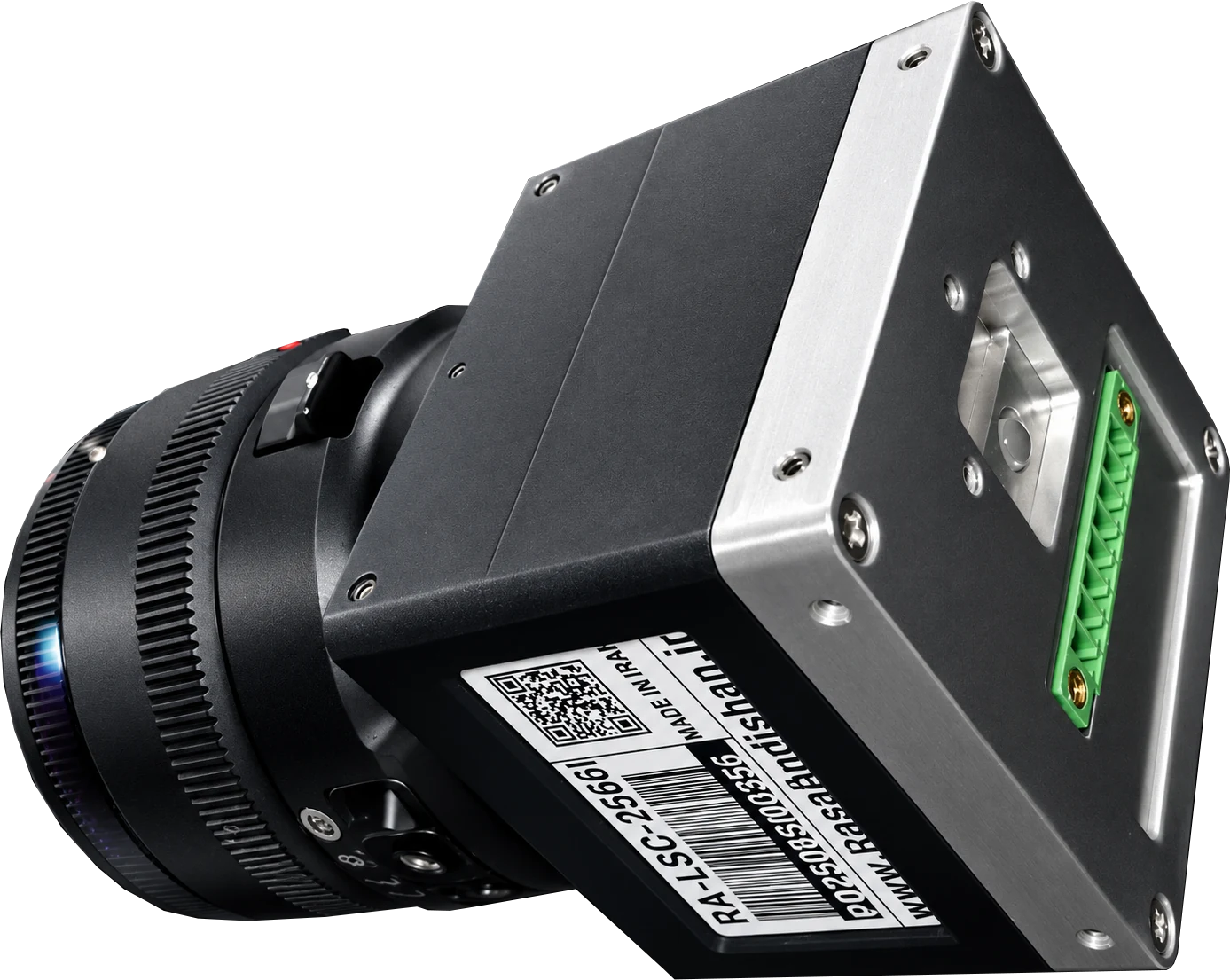
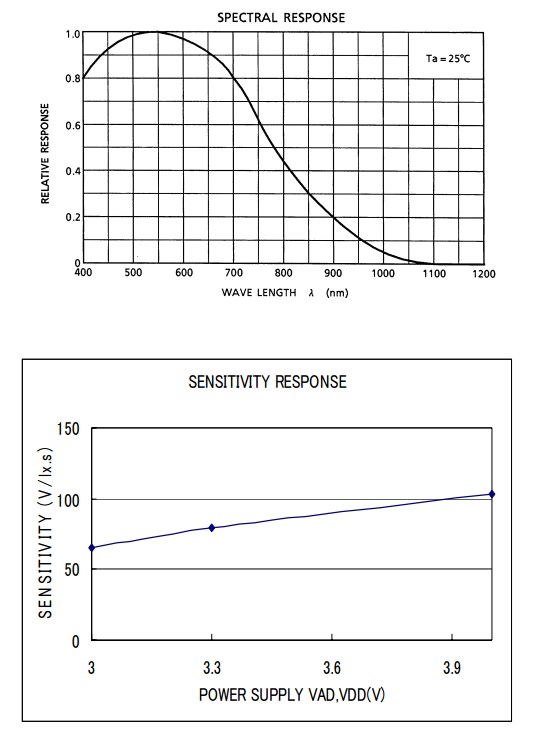
Design and construction of the RA-LSC-1103 line scan camera was completed in August 2020. The RA-LSC-1103 is a 1500-pixel monochrome line scan camera that operates at 641 Hz. You can use this camera for thickness measurement and for measuring object width on a conveyor belt. The spectral response and parametric specifications are shown in this section.
Selection guide
Laser thickness gauging and compact spectrometers
The RA-LSC-1103 has a small sensor with very fine pixels: 1,500 pixels at a 5.5 μm pitch on an 8.25 mm active length. Each pixel is 64 μm tall, so it still collects enough light despite its narrow width. We recommend it for laser thickness gauging, width measurement in small fields of view, and compact spectrometers covering 300 to 1000 nm. The line rate is 641 lines/s, with a 16-bit ADC.
- Sensor
- Linear CCD Array
- Effective pixels
- 1 × 1500
- Pixel size
- 5.5 μm × 64 μm
- Active length
- 8.25 mm
- Line rate
- 641 Hz
- Spectral range
- 300 nm to 1000 nm
- Dynamic range
- 200
- ADC resolution
- 16 bit
- Minimum exposure
- 10 μs
- Maximum exposure
- 14 min
In triangulation, the laser spot shifts on the sensor as the thickness changes. With the 5.5 μm pitch and software processing, shifts smaller than one pixel become visible. The 64 μm pixel height absorbs small vertical misalignment.
With a backlight and a 30 mm field of view, each pixel sees 0.02 mm of the object. You get a new measurement every 1.56 ms, and software locates the edge to better than one pixel. Object speed does not matter here, because each line is measured on its own.
Sensitivity from 300 nm and an 8.25 mm active length make it easy to build a compact spectrometer for UV and visible absorption. Spread the 300 to 1000 nm band over 1,500 pixels and each pixel sees about 0.47 nm of the spectrum.
For tracking beam position in optical equipment, the 5.5 μm pitch gives fine spatial detail. The 352 μm² pixel area collects enough signal even at a 10 μs exposure, and the electronic shutter prevents saturation with intense beams.
The sensor responds up to 1000 nm and sees near-IR bands alongside the visible. The signal is weaker at that end of the band, but long exposures of up to 14 minutes and the 16-bit ADC capture it well.
The 5.5 μm × 64 μm pixels are about 12 times taller than they are wide. The narrow width gives fine spatial detail; the height gives more light and better tolerance to vertical error. In laser thickness gauging, software computes the spot center to better than one pixel. So in a 30 mm field of view, where each pixel sees 0.02 mm, shifts of a few micrometers can be detected. At 641 lines/s you get a measurement every 1.56 ms. Exposure from 10 μs to 14 minutes works for bright laser light and for weak signals. One limit to keep in mind: the 200:1 dynamic range is fine for locating edges and peaks, but not for precise intensity measurement in high-contrast scenes.
The active length is 8.25 mm, so a lens with a small image circle is enough. The lens focal length is roughly working distance × 8.25 mm ÷ field-of-view width. Because the pixel pitch is only 5.5 μm, choose a lens that resolves better than that along the whole line. For width measurement, use a backlight. The 10 μs minimum exposure is short compared with the 1.56 ms line period, so both a bright laser and a faint source (with exposures up to 14 minutes) can be handled. The -I version has an FPGA, gain and offset adjustment, a 16-bit ADC, 480 Mbit/s USB and on-board RAM.
| RA-LSC-1103 USB Line Scan Camera Parameters | Specification |
|---|---|
| Sensor | Linear CCD Array |
| Pixel Size | 5.5 μm x 64 μm |
| Pixel Distance | 5.5 μm |
| Line Width | 64 μm |
| Effective Pixels | 1X1500 |
| Active Length | 8.25 mm |
| Spectral Range | 300 nm to 1000 nm |
| Max Pixel Frequency | 2 MHz |
| Dynamic Range | 200 |
| PGA Gain Resolution | 6 V/V - 64Steps |
| Programmable Offset Resolution | 300 mV - 512Steps± |
| Power consumption | 1.5 W |
| External Power | Not Required |
| Operational Temperature Range | −25 to +65 °C |
| Operation Systems | Windows 64-bit And Linux |
| Communication Port | USB2.0 Port |
| Multiple Cameras | Supported |
| Device Driver | Yes |
| Sample Codes | Matlab,LabView,C++,C#,VB.Net,Python |
| Camera Selection Guide | RA-LSC-1103-I |
|---|---|
| Processor | FPGA |
| Gain Adjust | ✓ |
| Offset Adjust | ✓ |
| ADC Resolution | 16 bit |
| USB Speed | 480Mbit/S |
| On Board RAM | ✓ |
| Jitter Order | < 6.3 ns |
| Exposure Min | 10 μs |
| Exposure Max | 14 min |
| Exposure Resolution | 1 μs |
| Line Rate | 641 Hz |
| Operational Temperature Range | −25 to +65 °C |
| Availability | 3Days After Order |