
Article
Speed camera
The speed camera is one of the most important tools for reducing road accidents. In this article we review how these cameras evolved, from radar to laser. If we know what problem each generation had, we will not repeat past mistakes.
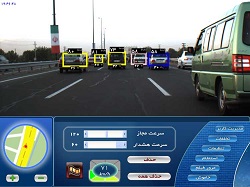
The first generation of speed cameras: radar
In the 1970s, cars capable of more than 150 km/h arrived on the roads. The number of accidents rose sharply. As average traffic speed rises, fatal crashes increase even faster.
To control speed, the first violation cameras with radar sensors reached the market in the same decade. They were called first-generation fixed radar cameras. They had practical problems and were expensive to maintain. European countries used only a small number of them.
Next came cameras using magnetic loops. These were hard to install and maintain. They also failed to detect fast vehicles reliably. For that reason they were ineffective on motorways and worked only on roads with low speed limits.
In the 1990s the second-generation radar camera reached the market. It solved many of the problems and costs of the first generation. But both generations shared one weakness. They could not measure the speed of every vehicle in different lanes at once; in other words, they were not multiple-lane.
Second-generation cameras worked on quiet roads in Europe and the US, and cut accidents sharply on those roads. But speed control on busy motorways and city streets still had no solution. Finally, in 2004, multiple-lane radar cameras reached the market.
Since 2000, laser speed meters have also helped with speed enforcement. Video speed meters measure the average speed of traffic. However, a fixed laser speed meter sometimes makes large errors.
Some companies have recently launched laser curtain speed meters. These systems do not yet meet environmental standards. Reputable scientific centres have not confirmed their accuracy either. Their repair and update costs are also unclear. Until they receive valid approval, they cannot be relied on.
Every image-based speed camera relies on an industrial camera. RasaAndishan area scan cameras are used for license plate reading and machine vision applications. In every frame, these cameras build a complete image of their field of view. All RasaAndishan cameras support external triggering. So you can set the moment of capture with an external signal.
To see the models, visit the Image processing camera page. The global history of this technology is covered in the Traffic enforcement camera article on Wikipedia.