
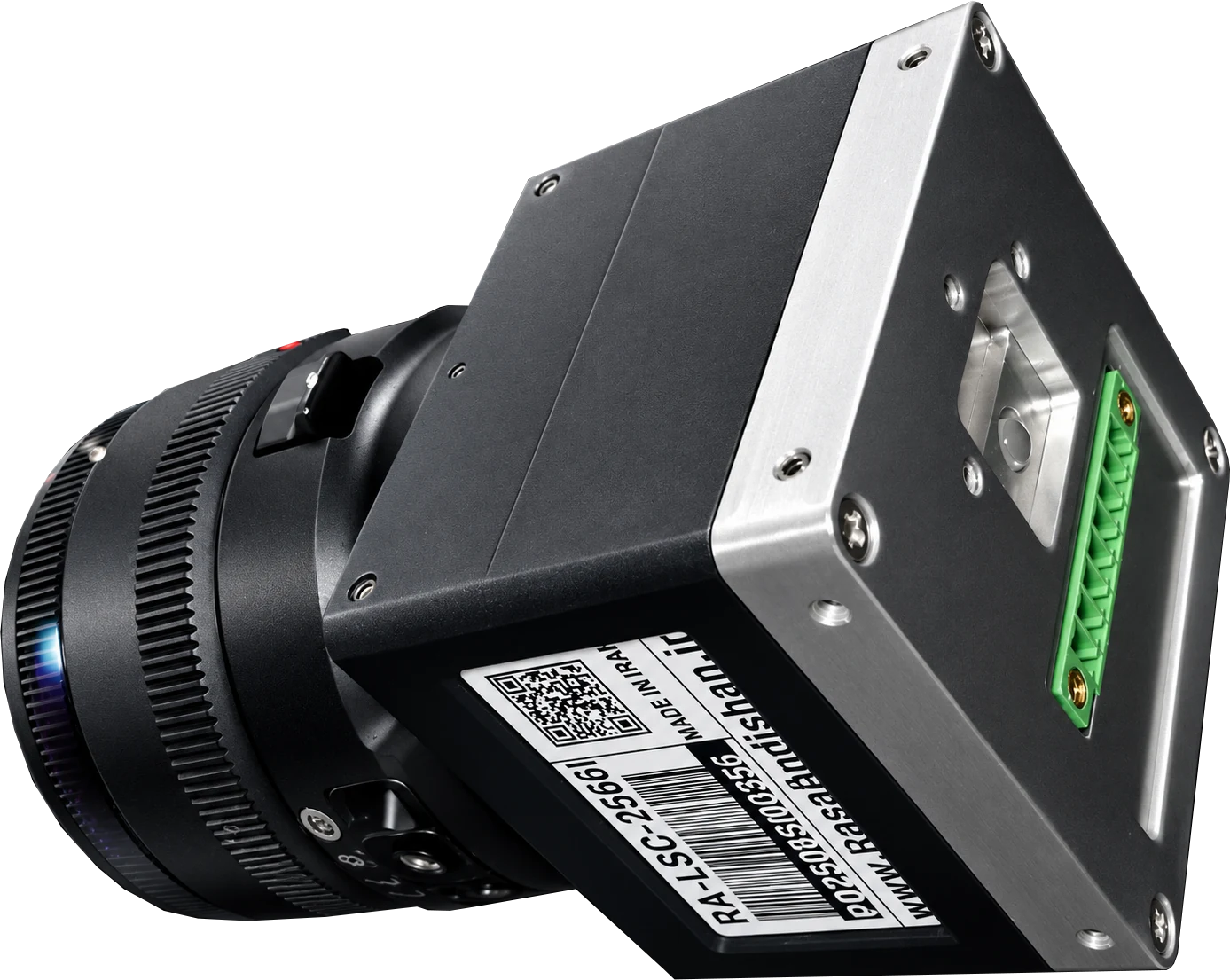
3000-pixel line scan camera, model RA-LSC-0526
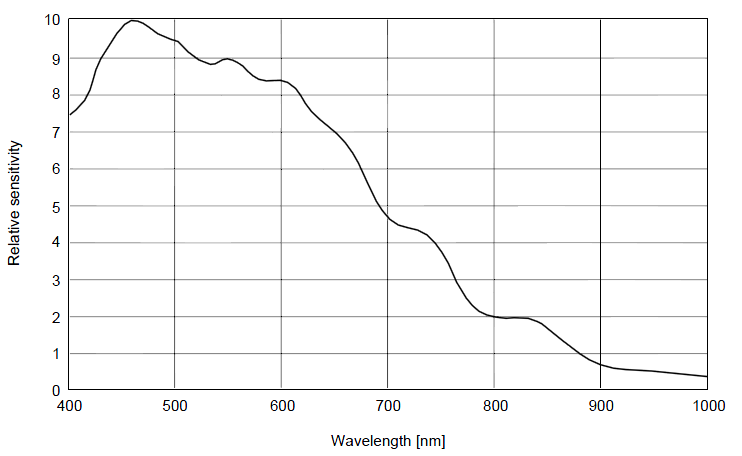
Design and construction of the RA-LSC-0526 line scan camera was completed in December 2018. The RA-LSC-0526 is a 3000-pixel monochrome camera with an electronic shutter. It runs at 325 Hz, is highly sensitive, and is suitable for spectroscopy. You can find the spectral response, parametric specifications, and full specifications further down this page.
Selection guide
Weak-signal spectroscopy in the visible and near-infrared, with long exposures
When you measure faint light, what matters most is being able to collect it for a long time. The RA-LSC-0526 lets you set exposure anywhere from 1 μs to 35.5 minutes, and its pixels are 7 μm × 200 μm. The linear CCD has 3,000 pixels over 21.0 mm and covers 400 to 900 nm. A 16-bit ADC converts the signal, the dynamic range is 320:1, the line rate is 325 lines/s and the maximum pixel frequency is 1 MHz.
- Sensor
- Linear CCD Array
- Effective pixels
- 1 × 3000
- Pixel size
- 7 μm × 200 μm
- Active length
- 21.0 mm
- Line rate
- 325.0 Hz
- Spectral range
- 400 nm to 900 nm
- Dynamic range
- 320
- ADC resolution
- 16 bit
- Minimum exposure
- 1 μs
- Maximum exposure
- 35.5 min
3,000 pixels over 21.0 mm means the spectrum is sampled at very closely spaced points. If the full 500 nm band is spread across the sensor, each pixel sees about 0.17 nm. The 200 μm pixel height captures the slit image over its full height.
When light is very low, as with faint luminescence, you can expose for up to 35.5 minutes to build up enough signal. Each pixel has an area of 1,400 μm², so it collects about 29 times the charge of a 7 μm square pixel in the same time.
Raman and fluorescence signals are weak, and the peaks sit close together. With a 7 μm pitch each pixel sees about 0.17 nm, so neighboring peaks stay separate. The 16-bit ADC records their relative intensities in fine steps.
If the laser line or spot vibrates vertically, the 200 μm pixel height keeps it on the sensor. Computing the profile centroid on the 7 μm pitch gives the position to better than one pixel. At 325 lines/s you get a new reading every 3.1 ms.
The intensity distribution of a beam or line source is recorded at 3,000 points over 21.0 mm. With bright sources, the electronic shutter and its 1 μs minimum exposure keep the sensor out of saturation. There is no need to change optics or add filters.
A 7 μm pitch means many samples per millimeter of spectrum, and a 200 μm height means the slit light isn't wasted. You get spectral resolution and sensitivity together. Exposure runs from 1 μs to 35.5 minutes in 1 μs steps, more than nine orders of magnitude. In practice you measure very bright and very faint samples with the same setup. Gain (64 steps) and offset (±512 steps) place the signal in the best part of the 16-bit converter range. The 320:1 dynamic range sets the upper limit on per-line signal-to-noise ratio. At 325 lines/s you get a full spectrum every 3.1 ms.
Your spectrometer or lens must place the spectrum or line image on the 21.0 mm sensor. With a lens, the focal length is roughly the working distance × 21.0 mm ÷ the field-of-view width. The line period is about 3.1 ms, but exposure can be as short as 1 μs. For weak signals, lower the line rate and extend exposure up to 35.5 minutes. The -I version includes an FPGA, gain and offset adjustment, a 16-bit ADC, 480 Mbit/s USB, an analog output and on-board RAM, with jitter on the order of 6.3 ns.
| RA-LSC-0526 USB Line Scan Camera Parameters | Specification |
|---|---|
| Sensor | Linear CCD Array |
| Pixel Size | 7 μm x 200 μm |
| Pixel Distance | 7 μm |
| Line Width | 200 μm |
| Effective Pixels | 1X3000 |
| Active Length | 21.0 mm |
| Spectral Range | 400 nm to 900 nm |
| Max Pixel Frequency | 1 MHz |
| Dynamic Range | 320 |
| PGA Gain Resolution | 6 V/V - 64Steps |
| Programmable Offset Resolution | 300 mV - 512Steps± |
| Power consumption | 1.5 W |
| External Power | Not Required |
| Operational Temperature Range | −10 to +60 °C |
| Operation Systems | Windows 64-bit And Linux |
| Communication Port | USB2.0 Port |
| Multiple Cameras | Supported |
| Device Driver | Yes |
| Sample Codes | Matlab,LabView,C++,C#,VB.Net,Python |
| Camera Selection Guide | RA-LSC-0526-I |
|---|---|
| Processor | FPGA |
| Gain Adjust | ✓ |
| Offset Adjust | ✓ |
| ADC Resolution | 16 bit |
| USB Speed | 480Mbit/S |
| Analog OutPut | ✓ |
| On Board RAM | ✓ |
| Jitter Order | < 6.3 ns |
| Exposure Min | 1 μs |
| Exposure Max | 35.5 min |
| Exposure Resolution | 1 μs |
| Line Rate | 325.0 Hz |
| Operational Temperature Range | −10 to +60 °C |
| Availability | 3Days After Order |