
Article
What is a spectrophotometer?
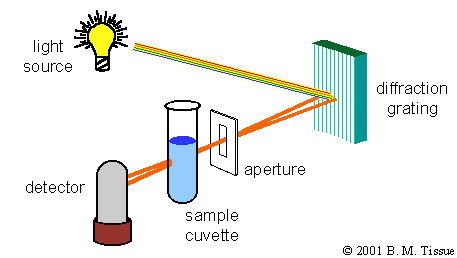
A spectrophotometer, or spectrometer, is an instrument that measures light intensity as a function of wavelength. It is based on an analytical method. In this method, a substance absorbs electromagnetic radiation in the visible and ultraviolet range, and the amount of the substance is determined from how strongly it absorbs. The source shines white light on a gas, solid, or liquid sample. The dispersing element is a prism or grating. In this method, the concentration of the substance is determined from the amount of light absorbed. With this instrument, you can measure even extremely small samples. It is also used to study molecules such as DNA and RNA. The four main parts of a spectrophotometer are the light source, the sample, linear CCD or CMOS detector and the interpreter.
RasaAndishan Mowj Pardaz designs and builds various CCD and CMOS linear detectors used in spectrophotometers, using detectors from Sony, Toshiba, and Hamamatsu.
Spectrophotometry is a way of measuring how much light a chemical substance absorbs as a beam passes through a sample solution. The key idea is that every compound absorbs or scatters light over a particular range of wavelengths, so this measurement can be used to determine the amount of a known substance. Spectrophotometry is one of the most useful methods of analysis in fields such as chemistry, physics, biochemistry, materials engineering, chemical engineering and chemical applications. A spectrophotometer measures the number of photons (light intensity) absorbed after the light passes through the sample solution. By measuring the intensity of the light received, it determines the amount (concentration) of the known chemical. Depending on the wavelength range of the light source, spectrophotometers fall into two groups:
1- A UV spectrophotometer uses light in the ultraviolet range (185–400 nm) and the visible range (400–700 nm) of the electromagnetic spectrum.
2- An IR spectrophotometer uses light in the infrared range (700–15000 nm) of the electromagnetic spectrum.
در اسپکتروفتومتری مرئی، جذب یا عبور نور از ماده میتواند بهوسیله رنگ مشاهدهشده تعیین شود. برای نمونه، محلولی که فقط نور بیرون از طیف مرئی را عبور میدهد و هیچ طولموج مرئی را رد نمیکند، در تئوری سیاه است. از سویی دیگر اگر همهی طولموجهای مرئی را عبور دهد و هیچ نوری را جذب نکند، محلول بیرنگ و شفاف است. اگر نمونه محلول رنگ قرمز را جذب کند (برابر با 700 نانومتر)، به رنگ سبز ظاهر میشود چون سبز رنگ مکمل قرمز است. اسپکتروفتومترهای مرئی در عمل از منشوری برای تفکیک طیف معینی از طولموج استفاده میکنند (فیلتر امواج نوری دیگر) به همین دلیل پرتو ویژهای از نور از طریق نمونه محلول عبور میکند.
A linear detector is the part of a spectrophotometer that turns the spectrum into data. RasaAndishan Mowj Pardaz designs and builds these detectors. One example is the RA-LSC-1304 detector. It has 3648 monochrome CCD pixels. Its sensitivity is very high. The detector also has an electronic shutter and comes in four versions.
If you are building or upgrading a spectrophotometer, see the RA-LSC-1304 linear detector page. Its spectral response and parametric specifications are on that page. To review the basics of the method, read the Spectrophotometry article on Wikipedia.